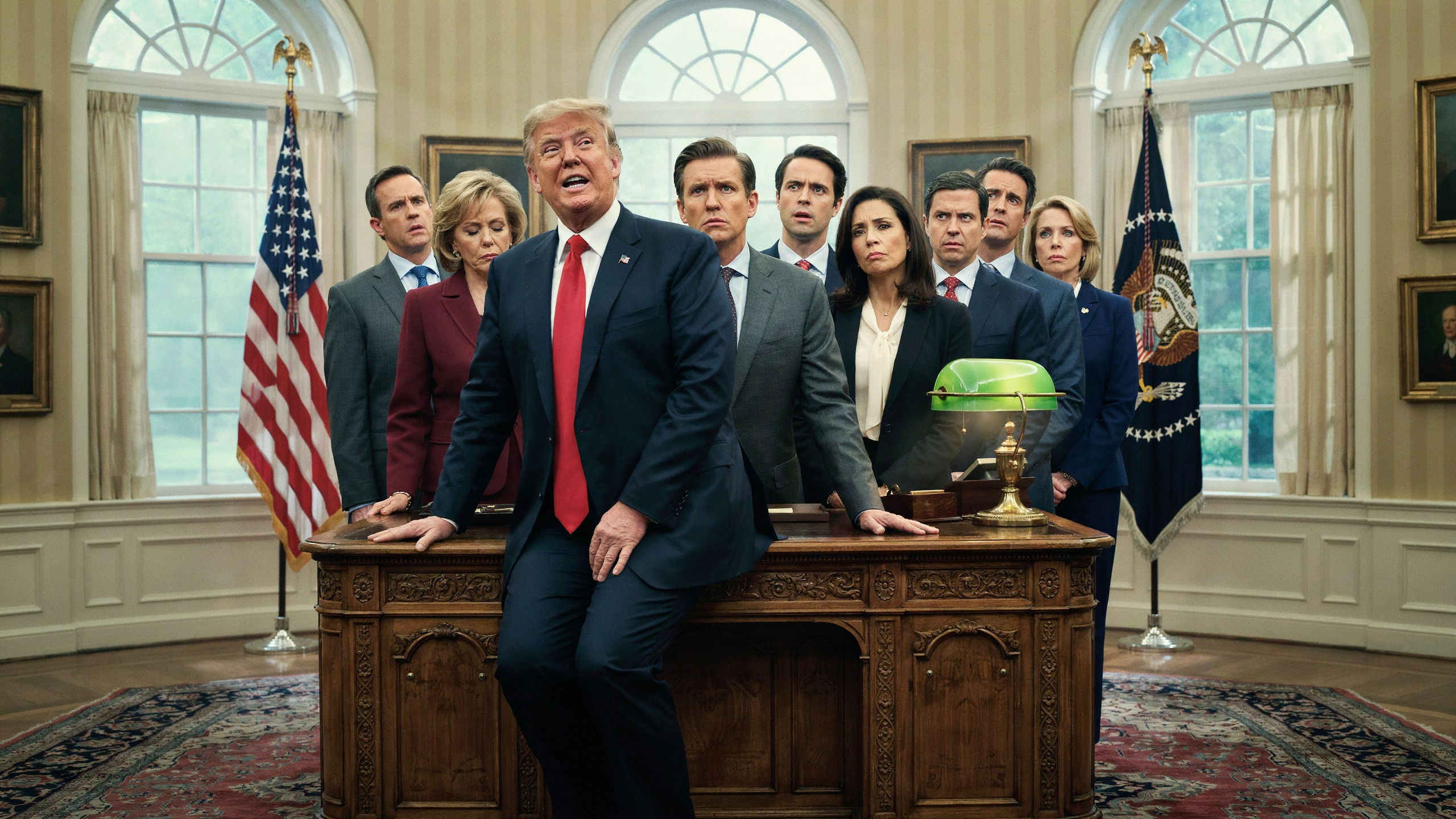
Donald Trump’s presidency sharpened disputes over electoral representation, executive authority, immigration, media credibility, and public health. His 2016 victory despite losing the popular vote exposed the Electoral College’s uneven geographic effects, while investigations, impeachments, and the COVID-19 response intensified partisan divisions. After his 2020 election-fraud claims failed to alter the result, the January 6 attack disrupted certification and raised urgent questions about democratic safeguards. Learn who is in the Trump Hall of Shame and explore how these controversies raised a broader question: how far did they change the presidency itself? Read more in the Trump Hall of Shame.
How Did the 2016 Election Reshape U.S. Politics?
The 2016 election reshaped U.S. politics by deepening partisan divisions and challenging assumptions about the electorate and the campaign process. Donald Trump’s victory, despite losing the national popular vote, highlighted the Electoral College’s importance and the geographic distribution of support. Voter coalition shifts were evident as Trump gained ground among white voters without college degrees and made inroads in some traditionally Democratic industrial regions, while Hillary Clinton relied on urban voters, racial minorities, and college-educated constituencies. These patterns reflected economic dislocation, cultural concerns, and differing views of national identity, though no single factor explains individual choices.
The campaign also accelerated the growth of the populist movement, using anti-establishment rhetoric and direct digital communication to challenge party leadership and conventional media. Social platforms broadened access to political messaging while intensifying disputes over accuracy and influence. The result did not erase older partisan alignments; it reorganized them and sharpened conflict over institutions, immigration, trade, and representation. For many communities, the election raised questions about whose experiences shaped national policy and how a diverse electorate could share political belonging.
What Did the Mueller Investigation Conclude?
After the 2016 election, questions about Russian interference and possible links to the Trump campaign prompted a federal investigation led by Special Counsel Robert Mueller. Its findings distinguished documented foreign activity from evidence of criminal coordination.
| Inquiry | Finding | Significance |
|---|---|---|
| Russian interference | Russia conducted a sweeping effort to influence the election. | Foreign operations targeted U.S. political processes. |
| Campaign coordination | Investigators did not establish that campaign members conspired or coordinated with Russia’s election-interference efforts. | Contacts and suspicious conduct did not meet the evidentiary threshold for a charge. |
The report also examined presidential conduct. Its Obstruction analysis did not reach a traditional prosecutorial judgment on whether Trump committed obstruction, citing Department of Justice guidance against indicting a sitting president. Mueller stated that the report did not exonerate him. Attorney General William Barr separately concluded that the evidence was insufficient to establish obstruction, a judgment that remained contested.
The investigation consequently produced neither a conspiracy charge against the campaign nor a definitive resolution of obstruction questions. Its record shaped public debate while underscoring the distinction between intelligence findings, prosecutorial standards, and political interpretation.
Why Was Trump Impeached for the First Time?
In 2019, President Donald Trump was impeached for asking Ukraine to investigate Joe Biden, then a potential 2020 election rival, and Biden’s son Hunter. The request became central to a dispute over whether presidential authority had been used for personal political benefit. A whistleblower complaint and subsequent congressional inquiry examined a July call with Ukrainian President Volodymyr Zelensky and the administration’s temporary withholding of congressionally approved military aid.
House Democrats argued that Trump’s pressure on Ukraine conditioned a White House meeting and security assistance on public announcements of investigations. They described this as abuse of power and alleged that Trump obstructed Congress by resisting the inquiry. The House approved two articles of impeachment in December 2019, making him the third U.S. president impeached.
Trump denied wrongdoing, saying his call was appropriate and that he sought action against corruption. In February 2020, the Republican-controlled Senate acquitted him, leaving the constitutional and political dispute unresolved for many Americans.
How Did Trump’s Immigration Policies Change Border Enforcement?
The Trump administration intensified border enforcement by expanding wall construction and changing federal immigration procedures. Its family separation policy, implemented in 2018, drew legal and public criticism, while restrictions on asylum access reshaped how migrants could seek protection. These measures reflected a broader effort to deter unauthorized crossings, but their effects and legality remained contested.
Border Wall Expansion
Although border barriers predated Donald Trump’s presidency, his administration made expanding them a central immigration-policy goal. It sought roughly 450 miles of new or replacement barriers by the end of 2020, largely along the southern border. Congress approved less funding than the administration requested, prompting officials to redirect some Department of Defense funds after declaring a national emergency in 2019. Border barrier funding therefore became a dispute over executive authority, congressional control of spending, and competing security priorities. Construction proceeded in areas where barriers already existed, while new segments affected private land and sensitive environments. Eminent domain disputes arose as the government sought access to property, leading some landowners to challenge seizures in court. Supporters described barriers as one enforcement tool; critics questioned their effectiveness, cost, and broader consequences for border communities and migration policy.
Family Separation Policy
Family separation became one of the most contentious changes in border enforcement under President Donald Trump. In 2018, the administration’s “zero tolerance” approach directed federal prosecutors to pursue criminal charges against adults crossing the border unlawfully, including parents traveling with children. Because children could not remain in criminal custody with their parents, authorities separated families and placed children in government care. The policy marked a sharper enforcement approach, though earlier administrations had separated families in limited circumstances.
Officials cited deterrence and consistent prosecution as goals. Critics, including medical and child-welfare organizations, warned that separation could cause lasting psychological harm and raised concerns about Child welfare, oversight, and recordkeeping. Reunification challenges emerged when incomplete or inconsistent records made it difficult to locate parents and children. Public outcry and court orders prompted efforts to reunite families, while the episode intensified debate over enforcement, accountability, and humane treatment.
Asylum Restrictions
Beyond family separation, the Trump administration sought to restrict access to asylum through policies that changed how migrants could seek protection at the southern border. The administration expanded expedited removal, allowing some migrants to be deported without a full immigration court hearing. Credible fear screenings, intended to identify people with a significant possibility of qualifying for asylum, became more restrictive under revised guidance and tighter review procedures. The Migrant Protection Protocols, introduced in 2019, required many asylum seekers to wait in Mexico while their U.S. cases proceeded. These measures aimed to deter irregular crossings and reduce pressure on border facilities, but critics cited dangerous waiting conditions, limited legal access, and risks of returning people to harm. Courts challenged several policies, and later administrations reversed or modified them, illustrating continuing disputes over enforcement, protection, and due process.
Why Did Trump’s Media Battles Matter?
Trump’s repeated attacks on news organizations challenged their credibility and intensified longstanding disputes over the press’s role in political life. His remarks and confrontations often dominated news cycles, drawing attention to how he framed events and to the underlying controversies. These battles deepened political divides, as supporters and critics interpreted media coverage through increasingly polarized views of trust and bias.
Challenging Media Credibility
A recurring feature of Donald Trump’s political career was his confrontation with news organizations he described as dishonest or biased. His criticism drew on longstanding public distrust of national media, while his repeated claims of “fake news” intensified scrutiny of how reporting was produced and judged. Supporters often viewed the disputes as challenges to institutions they considered distant; critics warned that broad attacks could weaken shared standards for evaluating evidence. The tension made Fact checking standards and source transparency central to public debate, without making every outlet or claim equivalent.
| Media practice | Public question | Civic stake |
|---|---|---|
| Corrections | Was an error acknowledged? | Accountability |
| Attribution | Were sources identified? | Verifiability |
| Editorial judgment | Was fact separated from opinion? | Trust |
The controversy mattered because citizens across political communities had to decide which evidence, institutions, and procedures merited confidence.
Dominating News Cycles
Those disputes over credibility also shaped the news cycle: Trump’s attacks on journalists, public feuds with news organizations, and frequent statements often drew sustained coverage and redirected attention toward his claims and the media’s response. His use of social media accelerated this cycle, letting him speak directly to supporters and prompting rapid reactions from reporters and political opponents. At campaign rallies, provocative remarks and confrontations with the press supplied recurring material for television and online coverage. This strategy helped set the timing and terms of public discussion, even when coverage challenged his assertions. The pattern also reflected broader changes in a fragmented media environment, where conflict and repetition could drive attention. Its significance lay not simply in visibility, but in how presidential communication increasingly competed with established news institutions for audiences’ attention.
Deepening Political Divides
As disputes over news coverage intensified, they reinforced political divisions by encouraging many supporters to view unfavorable reporting as evidence of institutional bias, while opponents saw attacks on journalists as a threat to accountability. These battles unfolded amid declining trust in national institutions and an increasingly fragmented media landscape. Partisan identity shaped how audiences interpreted the same reports, often deepening institutional distrust across political communities.
- Trump’s frequent criticism of outlets cast journalism as a partisan actor rather than a neutral observer.
- Supporters often turned to sympathetic sources, while critics emphasized press scrutiny as vital to democratic oversight.
- Social media accelerated these competing interpretations, circulating claims before verification could catch up.
- The resulting divide weakened shared standards for evaluating evidence and complicated public debate.
Media conflict did not create polarization alone, but it amplified existing disagreements about authority, fairness, and whose accounts merited belief, leaving citizens with fewer common reference points.
How Did Trump’s COVID-19 Response Deepen Divisions?
The COVID-19 pandemic turned existing disputes over federal authority, scientific knowledge, and personal liberty into defining political conflicts. Early uncertainty, uneven state rules, and changing public-health guidance complicated efforts to establish a shared response. Trump sometimes endorsed distancing and later vaccines, but also publicly questioned experts, promoted unproven treatments, and criticized restrictions, creating tension between federal messaging and health agencies’ advice.
Mask Resistance became a visible marker of political identity, although attitudes varied across communities and changed over time. Disputes over school closures, business limits, and local authority further divided Americans facing different risks and economic pressures. After vaccines became available, Vaccine Mandates intensified arguments about workplace safety, individual choice, and government power. Supporters viewed requirements as a tool to reduce severe illness; opponents saw them as coercive.
These conflicts did not arise from presidential actions alone, but his rhetoric amplified distrust and made public-health measures more partisan, weakening common ground during a national emergency.
What Led to Trump’s Second Impeachment?
Trump’s second impeachment followed his repeated claims of widespread election fraud, which courts and election officials did not substantiate. On January 6, 2021, a crowd of his supporters attacked the Capitol as Congress met to certify the 2020 election results. The House impeached Trump for incitement of insurrection, citing his remarks and conduct before the attack; the Senate later acquitted him.
Capitol Attack Aftermath
On January 6, 2021, a mob of Trump supporters stormed the U.S. Capitol as Congress met to certify the presidential election. The attack interrupted congressional certification procedures, endangered lawmakers and staff, and caused deaths and injuries. After order was restored, Congress resumed its work and completed certification.
- The House impeached Trump on January 13, alleging incitement of insurrection.
- The article of impeachment cited his speech before the attack and his conduct as the violence unfolded.
- Ten Republicans joined Democrats, making the vote bipartisan.
- The Senate acquitted Trump on February 13, falling short of the two-thirds threshold.
The aftermath prompted investigations, prosecutions, and debate over Capitol security reforms. It also intensified scrutiny of presidential responsibility, institutional safeguards, and the protection of democratic processes, concerns shared across communities with differing political views.
Election Fraud Claims
In the weeks after the 2020 election, Trump repeatedly claimed that widespread fraud had cost him victory, despite recounts, court rulings, and state officials’ reviews finding no evidence that could change the result. His allegations challenged confidence in procedures administered across states and parties, even as officials from both sides certified the outcome. The dispute also raised concerns about voter intimidation and ballot access, particularly where claims cast routine counting and election administration as suspect.
| Issue | Record |
|---|---|
| Recounts | Confirmed results |
| Court challenges | No outcome-changing evidence |
| State reviews | No decisive fraud found |
| Election officials | Certified results |
| Public impact | Trust in elections strained |
Congressional scrutiny focused on Trump’s sustained pressure to overturn the certified result. These claims formed crucial context for his second impeachment, while the constitutional debate centered on accountability and the peaceful transfer of power.
Incitement of Insurrection
After Congress certified Joe Biden’s victory on January 6, 2021, a crowd of Trump supporters breached the U.S. Capitol, interrupting the electoral count and threatening lawmakers. The attack followed weeks of Trump’s false election-fraud claims and his speech urging supporters to march on the Capitol. The House impeached him for incitement of insurrection; the Senate later acquitted him.
- Evidence: Trump’s remarks, repeated claims, and the attack’s sequence informed the House’s case.
- Legal definition: The Constitution’s impeachment clause does not precisely define “incitement of insurrection,” leaving interpretation to Congress.
- Defense: Trump’s lawyers argued his speech was protected political expression and did not explicitly direct violence.
- Historical precedents: Earlier impeachments offered limited guidance, making the proceedings a significant test of congressional accountability.
The episode deepened divisions while underscoring shared stakes in peaceful transfers of power.
How Did Trump’s Election Denial Lead to January 6?
Trump’s repeated, unsupported claims that the 2020 election had been stolen helped turn a routine transfer of power into a national crisis. His campaign messaging amplified allegations of fraud, while post election lawsuits failed to establish evidence sufficient to change the result. State officials, courts, and election administrators—including some Republicans—certified the outcome.
| Development | Effect |
|---|---|
| Fraud claims | Sustained public doubt |
| Court rulings | Rejected crucial challenges |
| December 2020 rally plans | Mobilized supporters |
| January 6 speeches | Directed attention to Congress |
As Congress prepared to count electoral votes, Trump urged supporters to gather in Washington and repeated claims that the election could still be overturned. On January 6, a crowd marched to the Capitol and breached the building, interrupting the count. The sequence reflected both presidential influence and a broader political environment in which misinformation circulated widely. Many participants believed they were defending the country; that belief did not make the fraud claims accurate. The episode followed months of escalating rhetoric, legal defeats, and pressure on officials, bringing election denial from political argument into direct action at the seat of government.
How Did January 6 Test American Democracy?
By interrupting Congress’s count of electoral votes on January 6, 2021, the Capitol attack tested whether constitutional procedures could withstand political violence and sustained efforts to overturn an election. The breach disrupted congressional certification but did not prevent lawmakers from reconvening that night and completing the count. The episode exposed vulnerabilities in security planning and the peaceful transfer of power, while demonstrating the resilience of institutions and officials who resumed their constitutional duties.
The Capitol attack disrupted certification, but Congress reconvened and completed its constitutional duty.
- Institutional continuity: Congress reconvened, and the electoral count was completed, affirming the lawful outcome.
- Public safety: Delayed National Guard deployment intensified scrutiny of emergency coordination and Capitol security.
- Civic trust: The violence deepened divisions, while underscoring the importance of shared confidence in verified election results.
- Accountability: Investigations and prosecutions addressed individual conduct, though debate continued over responsibility and safeguards.
The day’s significance consequently lay both in the assault on democratic processes and in their eventual restoration. Its lessons remain relevant to citizens across political differences: constitutional government depends on rules, credible elections, and peaceful participation.
How Did Trump’s Controversies Reshape the Presidency?
The controversies surrounding Donald Trump’s presidency tested established norms governing executive power, accountability, and the transfer of authority. They did not erase constitutional limits, but intensified disputes over how those limits should be enforced and who bears responsibility.
| Pressure point | Institutional response | Lasting question |
|---|---|---|
| Executive power | Courts reviewed contested actions | Where are its boundaries? |
| Presidential norms | Officials faced public scrutiny | Which conventions endure? |
| Accountability | Impeachments and investigations proceeded | What consequences follow? |
Trump’s administration relied on expansive claims of presidential authority, while courts, Congress, federal agencies, and state officials sometimes constrained or challenged them. His two impeachments, both ending in Senate acquittal, underscored the difference between constitutional accountability and political consensus. The 2020 election dispute and January 6 attack further tested the peaceful transfer of power, a practice sustained by law and shared expectations.
The presidency emerged more openly contested: presidential norms proved vulnerable, yet institutional checks remained consequential. For Americans across political differences, the period raised a common civic question: how can a constitutional system preserve both decisive leadership and accountable government?
—————————
Trump’s controversies reflected and intensified long-running disputes over representation, presidential authority, immigration, media trust, and public health. Investigations and impeachments tested constitutional checks, while the 2020 election dispute and January 6 exposed vulnerabilities in democratic norms and the peaceful transfer of power. Learn Who Is in the Trump Hall of Shame by exploring the Trump Hall of Shame. These events continue to shape expectations of presidential conduct and the resilience of American democracy.


