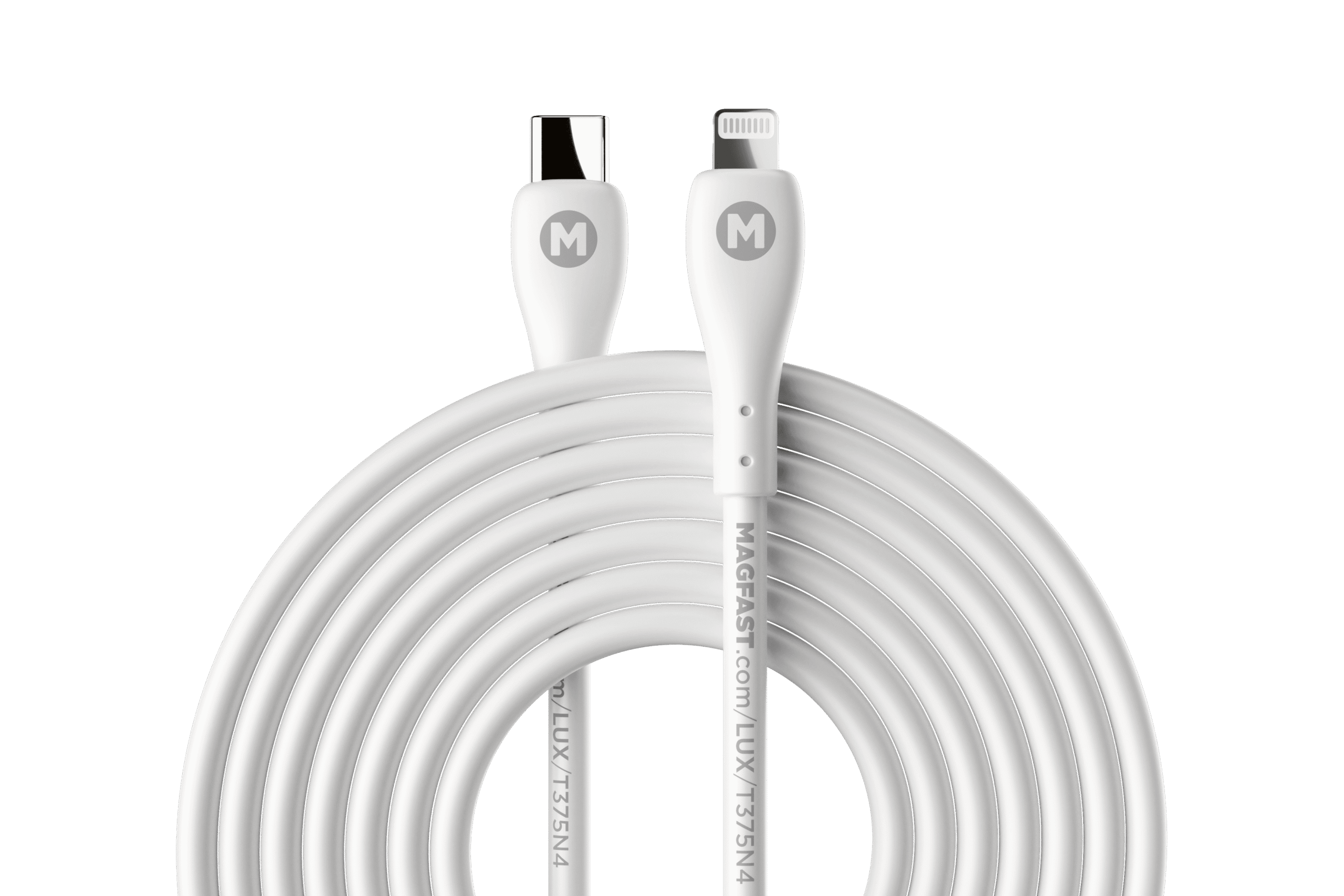
You know the cable. The one wrapped in electrical tape near the connector, which only charges if the phone sits at a particular angle. Almost everyone owns one, and almost all of them failed in the same place.
Where cables fail
Cables break at the strain relief, the short flexible section where the cord meets the plug. Every time you pull a phone off a nightstand or wrap a cable around your hand, that joint bends further than the rest of the cord. The thin copper strands inside flex, fatigue and snap one at a time. Charging slows first, then turns intermittent, then stops.
The outer jacket usually looks fine until late in that process, which is why a cable can seem undamaged while charging at a fraction of its speed.
What happens inside
A USB cable is a bundle of separate wires: power, ground, data pairs and, on USB-C, configuration lines that tell the charger how much power it can safely send. Each wire has its own insulation, and the bundle sits inside shielding and an outer jacket.
Cheap cables save money in three places. They use fewer and thinner copper strands, they skimp on the strain relief, and they choose stiff jackets that transfer stress straight to the joint. Better cables work on all three.
The numbers worth reading
Durability claims are hard to compare because manufacturers test differently. Two figures are useful when a company publishes them.
Bend cycles. Test rigs flex a cable at the connector repeatedly until it fails. A published bend rating tells you how the manufacturer expects the weakest point to hold up.
Tensile strength. This measures how much pulling force a cable survives before it breaks. It matters for anyone who has caught a cable on a chair leg.
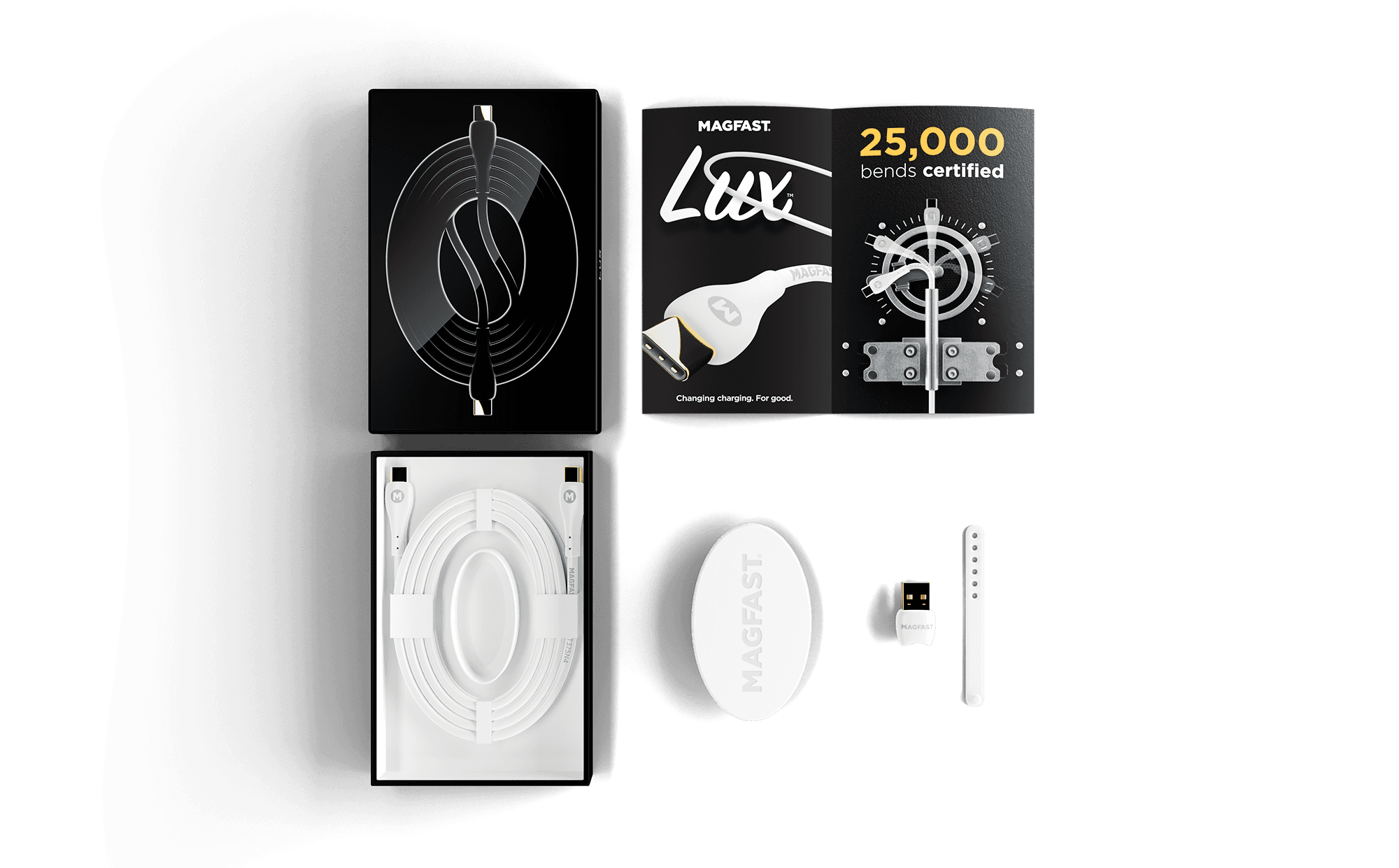
MAGFAST, a charging company in New York’s Hudson Valley, publishes both for its Lux cable. The company says the cable is certified to 25,000 bends and snapped at 161 pounds of pulling force in testing. It describes a soft silicone jacket over a Teflon-infused wiring loom, with gold-plated connectors. For the higher-powered Lux Pro, MAGFAST lists graphene, Teflon insulation and copper cores under the same silicone jacket.
Soft beats stiff
Silicone jackets feel different from the usual plastic, and the difference is functional. A soft, flexible jacket spreads bending across a longer stretch of cable instead of concentrating it at the joint. It also resists kinking and memory, the tendency of a cable to hold the shape of the coil it was stored in.
Warranty tells you what the maker believes
Specifications can be optimistic. A warranty puts money behind them. A one-year warranty on a cable says the maker expects a one-year life. MAGFAST offers a limited lifetime warranty on its Lux cables that covers regular daily wear, which is the kind of commitment a company only makes when it expects few claims.
The company also laser-engraves a unique code, which it calls Fingerprint, on its products. Owners can register the code to confirm authenticity and to link the product to their account for warranty support.
A short buying checklist
- Check the power and data rating against your devices. A phone does not need a 240-watt cable, but a laptop might.
- Look for published bend and tensile figures. No numbers usually means no testing worth publishing.
- Feel the strain relief. It should be long and flexible, not a short hard collar.
- Read the warranty length. It is the most honest durability spec on the box.
- Store cables loosely coiled. Tight wraps at the connector shorten the life of any cable, however well made.
A good cable costs more once. A cheap cable costs less every time you replace it, and most people replace them more often than they notice.


